
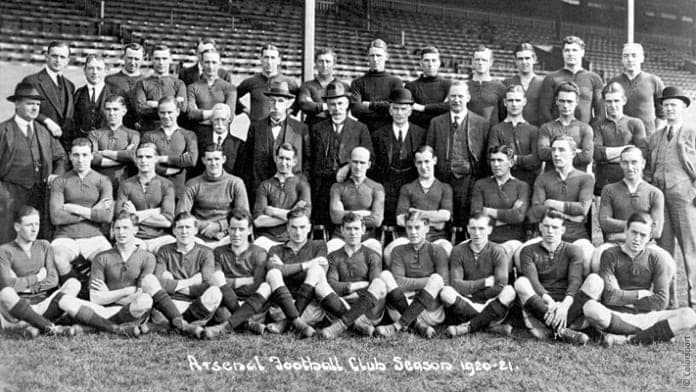
Moving a football club across a city is rarely simple, and in 1913 it was almost unheard of. Woolwich Arsenal's relocation from Plumstead to Highbury, in Islington, wasn't just a change of postcode - it planted a professional football club in a part of north London that already had clubs of its own, none of whom had been consulted and none of whom were pleased about it.
Tottenham Hotspur, already established a few miles away, led the objections, and were joined by other local clubs in petitioning the Football League against the move. Their argument was straightforward: Arsenal were an established southeast London club with no real history in Islington, arriving to compete for the same crowds and the same players as clubs that had spent years building a following there. The objections didn't work. The League allowed the move, and Arsenal played their first Highbury fixture in September 1913.
It's easy to see, with a century of hindsight, why the move mattered so much to the clubs objecting. Highbury sat close to an Underground station, giving Arsenal a transport advantage over almost every other London club of the period - a practical edge the Manor Ground in Plumstead had never had. Within a few decades, under Herbert Chapman, that advantage helped turn a mid-table southern club into the dominant force in English football.
The grievance never fully went away. It resurfaces every north London derby in one form or another - the suggestion that Arsenal don't really belong in that part of the city, that the club arrived uninvited and simply stayed. More than a hundred years on, it remains one of the odder foundations for a football rivalry: not a dispute over a player, or a trophy, but over a postcode Arsenal moved into before either club's current supporters were born.