Origins · · 4 min read
From Dial Square to Sunday League: What Arsenal's Factory-Team Origins Still Teach Us
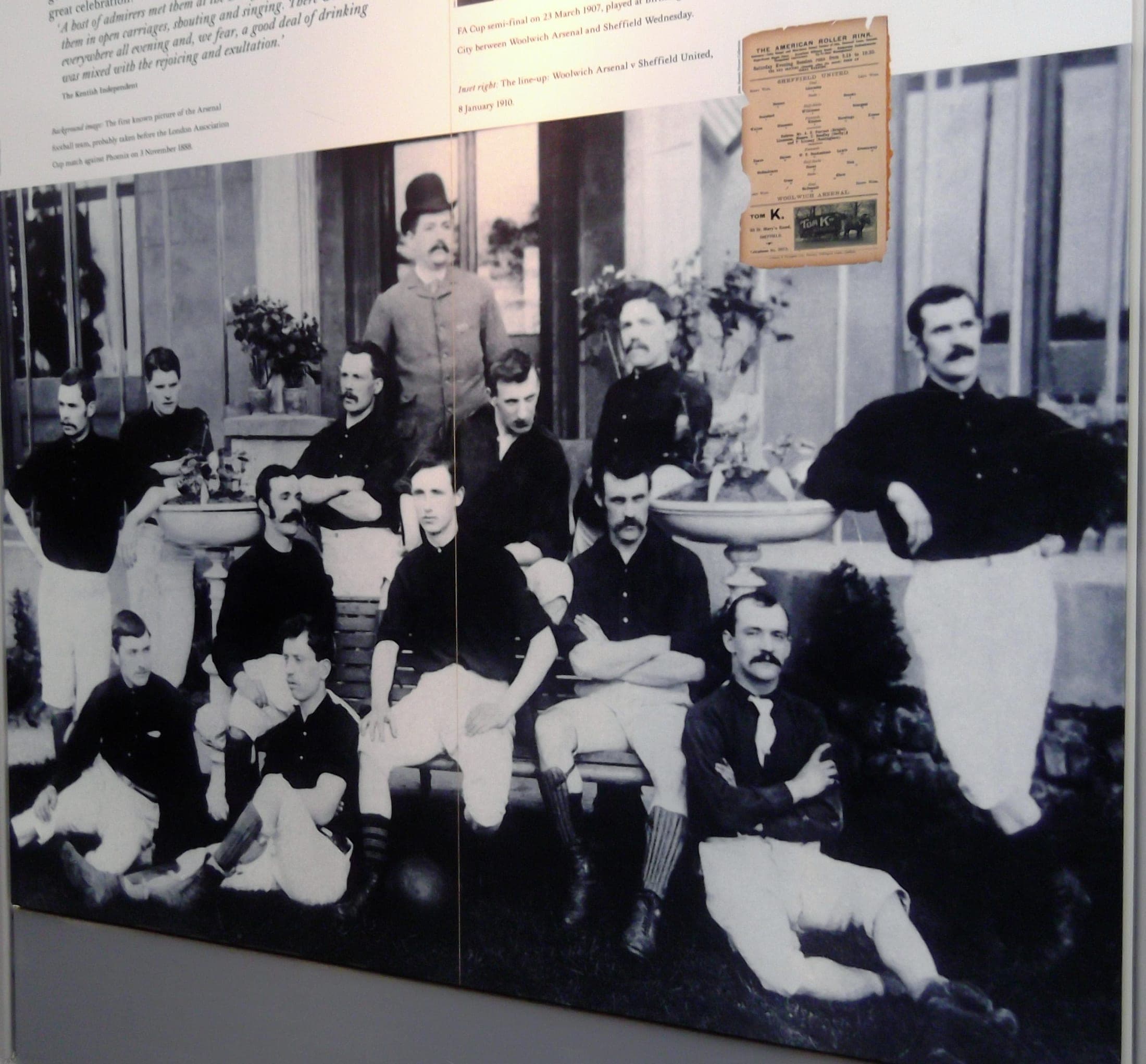
Arsenal did not begin with a boardroom, a badge designer, or a marketing plan. It began with a workshop. In 1886, a group of workers at the Royal Arsenal armaments factory in Woolwich, southeast London, decided they wanted a football team of their own. They called it Dial Square, after the workshop most of the founding players worked in, and played their first match on 11 December 1886. Within weeks the name had changed to Royal Arsenal, and a few years later to Woolwich Arsenal - but the club that would go on to win the league, the FA Cup, and go an entire top-flight season unbeaten started life as exactly what it sounds like: a works team, organised by the people who played for it.
That origin story is not unique to Arsenal. It was, if anything, the default. English football in the late nineteenth century grew out of factories, railway depots, and churches almost as often as it grew out of anything resembling a modern club structure. West Ham United trace their roots to the Thames Ironworks shipbuilding company. Manchester United began as Newton Heath, a team of railway workers at the Lancashire and Yorkshire Railway depot. The pattern repeats across the English game: people who worked together decided, informally at first, to also play together - and organise a proper fixture list once informal kickabouts stopped being enough.
What's easy to miss, looking back at these clubs from the vantage point of billion-pound broadcast deals and global fanbases, is that the founding impulse was never really about building an institution. It was about a group of people wanting a real competition: a table, a set of fixtures, a reason to turn up on a Saturday and see how the team was doing against a genuine rival, not just a friendly. Arsenal's early seasons after turning professional in 1893 - the first southern club to do so - were exactly that: a young club trying to prove it belonged in a real league table alongside teams that had been established for years.
That same instinct hasn't gone anywhere. It just doesn't always make the history books. Every weekend, thousands of Sunday league sides, five-a-side works teams, and pub leagues carry on the same basic idea Dial Square's founders had in 1886: a group of people who play together deciding they want it to count for something - a league table, a season, bragging rights that last longer than one match. The scale is different. The stakes are lower. The spirit is identical.
The tools have changed more than the impulse has. Where Woolwich Arsenal's committee would have kept fixtures and results on paper, most grassroots organisers today reach for something built for exactly that job - Sports League Hub is one of the tools built specifically to let anyone run a proper league table for football, and plenty of other sports besides, without needing a boardroom or a budget. It's a small, practical echo of the same thing: normal people, organising their own competition, because a kickabout isn't quite the same as a season.
If this kind of history - not just Arsenal's, but the wider story of how sport gets made by the people who play it - is your kind of thing, our sister site Moments of Legends tells the stories behind some of the greatest moments across every sport, not just one club. Worth a look once you've finished exploring the rest of this site.