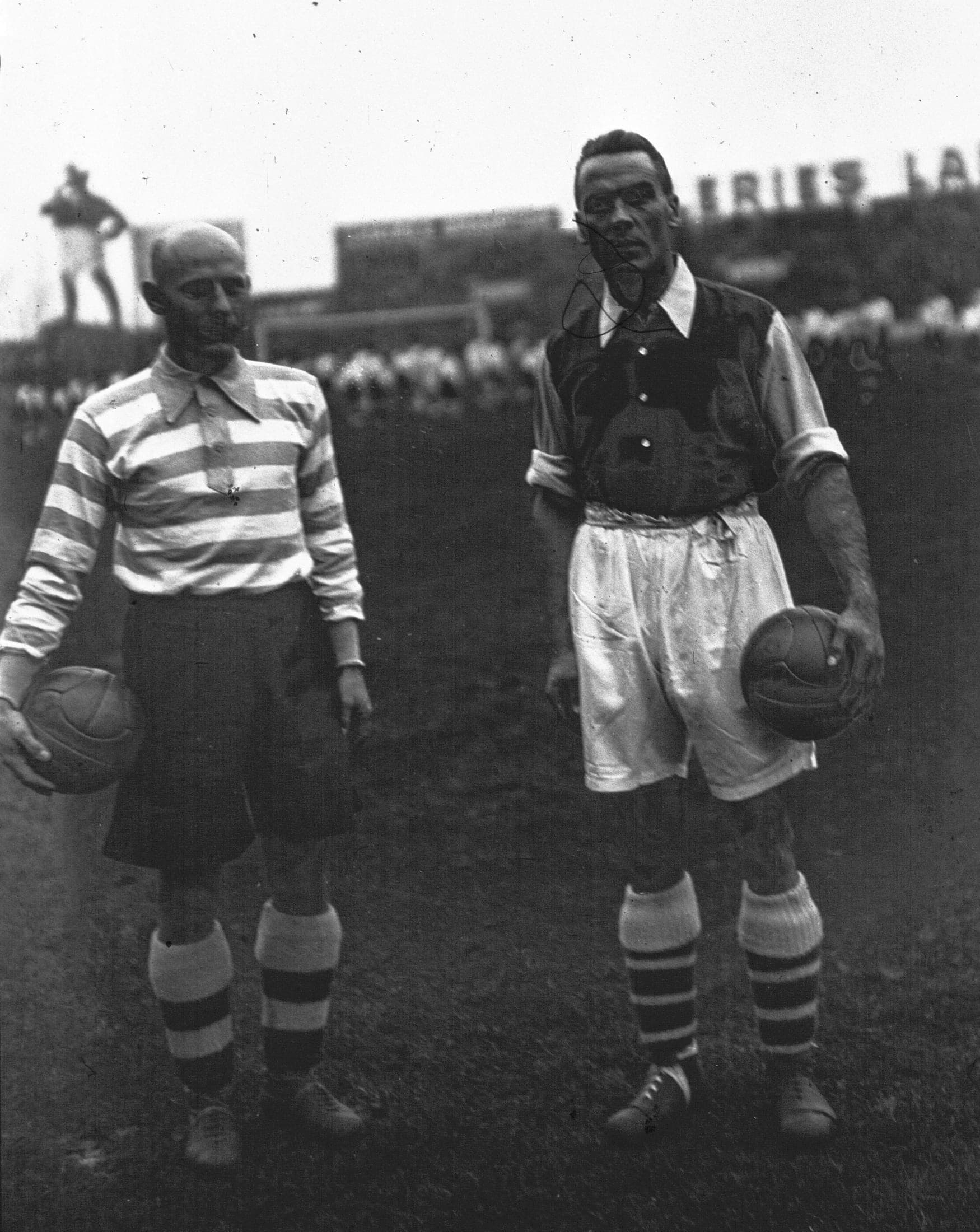
It's easy, from a distance of nearly a century, to underestimate how total Arsenal's dominance of 1930s English football actually was. Five league titles and two FA Cups arrived across the decade, built on the tactical system Herbert Chapman introduced when he took over in 1925 and carried on, after his sudden death in 1934, by the staff and players he'd assembled around him.
What made the run remarkable wasn't just the trophy count. It was the consistency of it, across a decade in which travel was slower, squads were smaller, and no club had the financial or structural advantages professional football would later develop. Arsenal simply out-organised almost everyone else in the country: a settled system, a well-drilled squad, and a professional culture around fitness and preparation that most other clubs hadn't caught up to yet.
The team became, in a very literal sense, the standard other clubs were judged against. Newspapers of the period regularly framed title races in terms of whether anyone could finally catch Arsenal, rather than treating the club as one contender among several. It's the closest English football had come, up to that point, to a single club being treated as the sport's benchmark rather than simply its most recent winner.
The 1930s side is also, in hindsight, the clearest evidence of how much Chapman's ideas mattered beyond his own lifetime. He didn't live to see most of the decade's silverware, but the system and the culture he'd built kept producing it for years after he was gone - a rare case of a manager's influence outlasting the man by a wide enough margin to define an entire era in his name.