Managers · · 4 min read
Herbert Chapman's Blueprint: The Manager Who Rebuilt the Sport Around Him
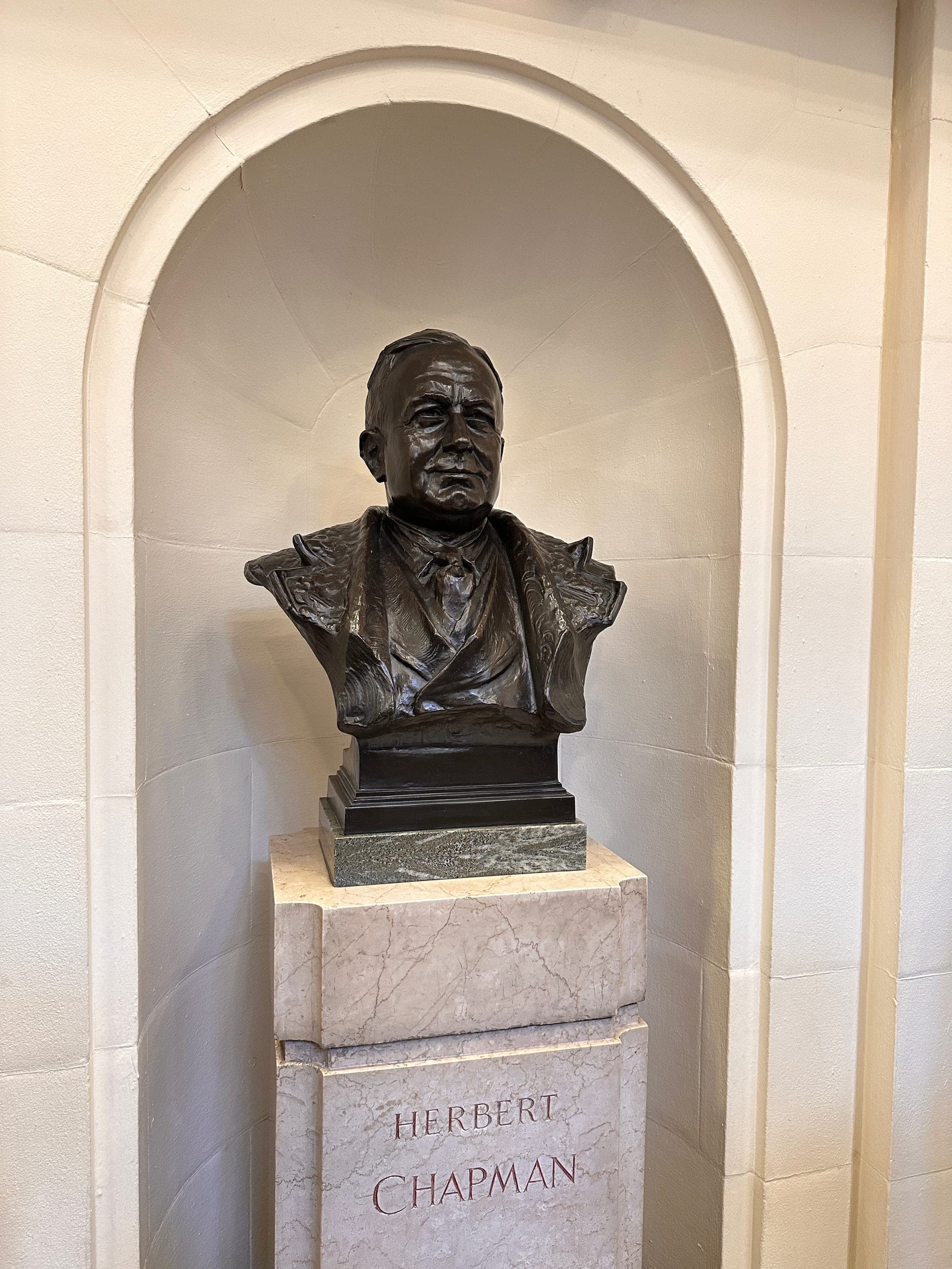
Most managers who transform a football club do it within the club's existing rules. Herbert Chapman, who arrived at Arsenal in 1925, transformed the sport's rules to fit what he wanted his club to do. He is the reason a huge proportion of what looks entirely ordinary about football today - formations, numbered shirts, floodlit matches - exists in the form it does.
The most significant change was tactical. Chapman pioneered the WM formation, a reorganisation of players across the pitch built around a change in the offside law that had made the old attacking approach obsolete almost overnight. Where other clubs scrambled to adapt, Chapman designed a system from scratch that turned the new rule into an advantage, and Arsenal's results in the years that followed made the WM the template every ambitious club in the country eventually copied.
He pushed for changes well outside team selection, too. Chapman campaigned for floodlit football at a time when the FA still banned it, for numbered shirts to help spectators tell players apart, and even for a change to the name of the local Underground station - Gillespie Road became Arsenal in 1932, at his request, making the club the only one in the country with a Tube stop bearing its name. Not all of his ideas landed immediately; floodlights weren't officially sanctioned in English league football until decades after he first proposed them. But the instinct behind almost all of it was the same: treat football as something worth professionalising properly, not just playing.
Under Chapman, Arsenal won their first major trophies and set the template for the decade that followed - five league titles across the 1930s, built on a system he designed and a culture of professionalism he insisted on long before it was standard. He died suddenly in 1934, of pneumonia, at fifty-five, in the middle of that run of dominance. The team he built carried on winning without him. The sport he helped reshape never really went back.