
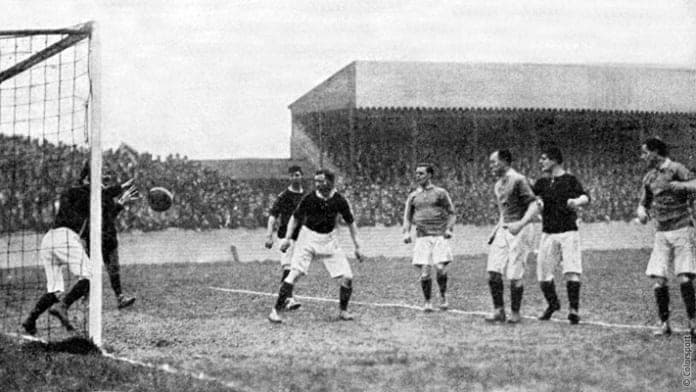
For two decades, from turning professional in 1893 until the move to Highbury in 1913, Woolwich Arsenal's home was the Manor Ground in Plumstead - a modest, functional stadium a short walk from the Royal Arsenal factory whose workers had founded the club. It was never an especially large ground even by the standards of the day, and it had none of the architectural ambition that would later define Highbury. What it did have was a terrace steep enough, and rough enough, to earn a nickname borrowed from a very different kind of battlefield.
The 'Spion Kop' - a name later adopted by grounds up and down the country, most famously at Anfield - took its title from a hill in South Africa where British troops suffered heavy losses during the Boer War in early 1900. Football terraces that shared its steep, exposed profile picked up the name almost as slang, a dark joke about the conditions supporters were willing to stand in. The Manor Ground's Kop was one of the earliest examples anywhere in England.
Crowds at the Manor Ground were rarely large by the standards Arsenal would later become used to. Plumstead's transport links were poor, and the surrounding area, dominated by the armaments works, didn't have the residential density that fed bigger London grounds. It was one of the practical reasons the club eventually decided the ground, however loved, couldn't support the ambitions of a professional club competing in the Football League.
Little of the Manor Ground survives today, and it rarely gets mentioned in the same breath as Highbury or the Emirates. But it was Arsenal's home for as long as the club spent as Woolwich Arsenal - the entire era in which the club proved, week after week against sides from the north and Midlands, that it belonged in professional football at all.