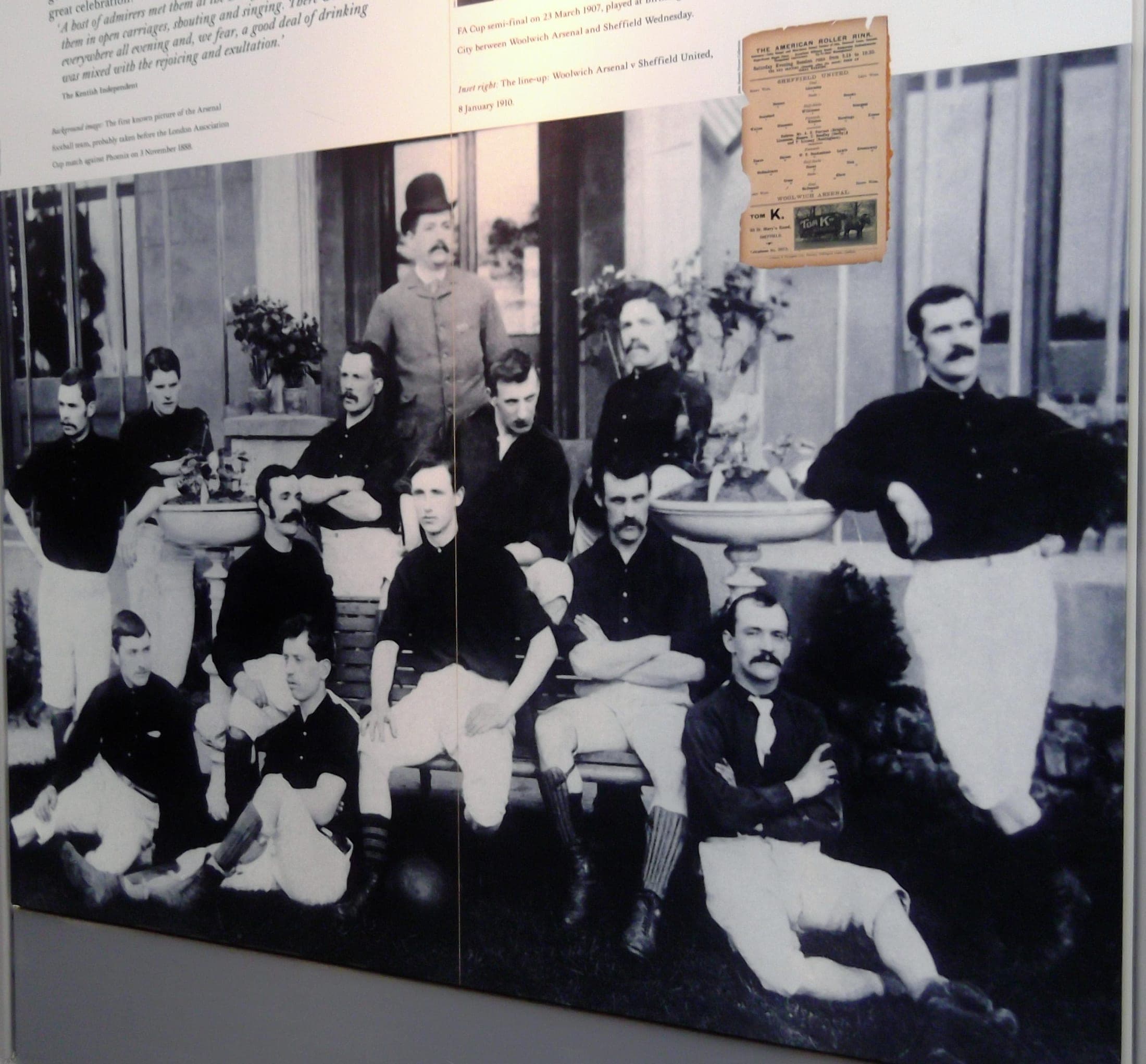
On 11 December 1886, a group of workers at the Royal Arsenal armaments factory in Woolwich played their first proper match under the name Dial Square, borrowed from the workshop most of the founding players clocked into every morning. It lasted about a month. Within weeks, the players had renamed themselves Royal Arsenal, trading a name that represented one workshop for one that represented the whole factory site.
That first change tells you something easy to miss about clubs from this era: they weren't founded by owners or boards. They were founded by the people who played for them, and named accordingly. Dial Square was accurate but narrow. Royal Arsenal was still accurate, and it let every worker at the factory - not just the dial-square crew - see the team as theirs.
The second change came in 1893, when the club turned professional and joined the Football League as the first southern club to do so. The name shifted again, to Woolwich Arsenal, anchoring the club explicitly to the corner of southeast London it called home. It was a practical rebrand as much as anything: a professional club competing against sides from Lancashire and the Midlands needed a name that told people exactly where it came from.
The final change, in 1913, dropped 'Woolwich' entirely when the club crossed the Thames to Highbury - a decision Tottenham supporters have never quite let go of, more than a century on. What's left after three renames in twenty-seven years is a name with no place in it at all: just Arsenal, a word that started as a reference to a munitions factory and ended up meaning something closer to an institution.
It's a pattern that plenty of clubs below the professional game still live through today - a five-a-side team renamed after a sponsor, a Sunday league side that drops the name of a pub it no longer plays out of. Tools like Sports League Hub exist for exactly that kind of club: one whose identity is still forming, table by table, season by season, long before anyone's thinking about a badge.